

July 2022 NewsLetter
Management comments
July was a very typical month for our strategy when monthly performance of 2.6% (after fees) was very closed to our historical monthly return (2.86%). Even statistical patterns in July were almost the same as they are since the inception: 53% positive days while an average daily profit is almost 1.5 times higher than an average daily loss. This is exactly how our strategy makes money.
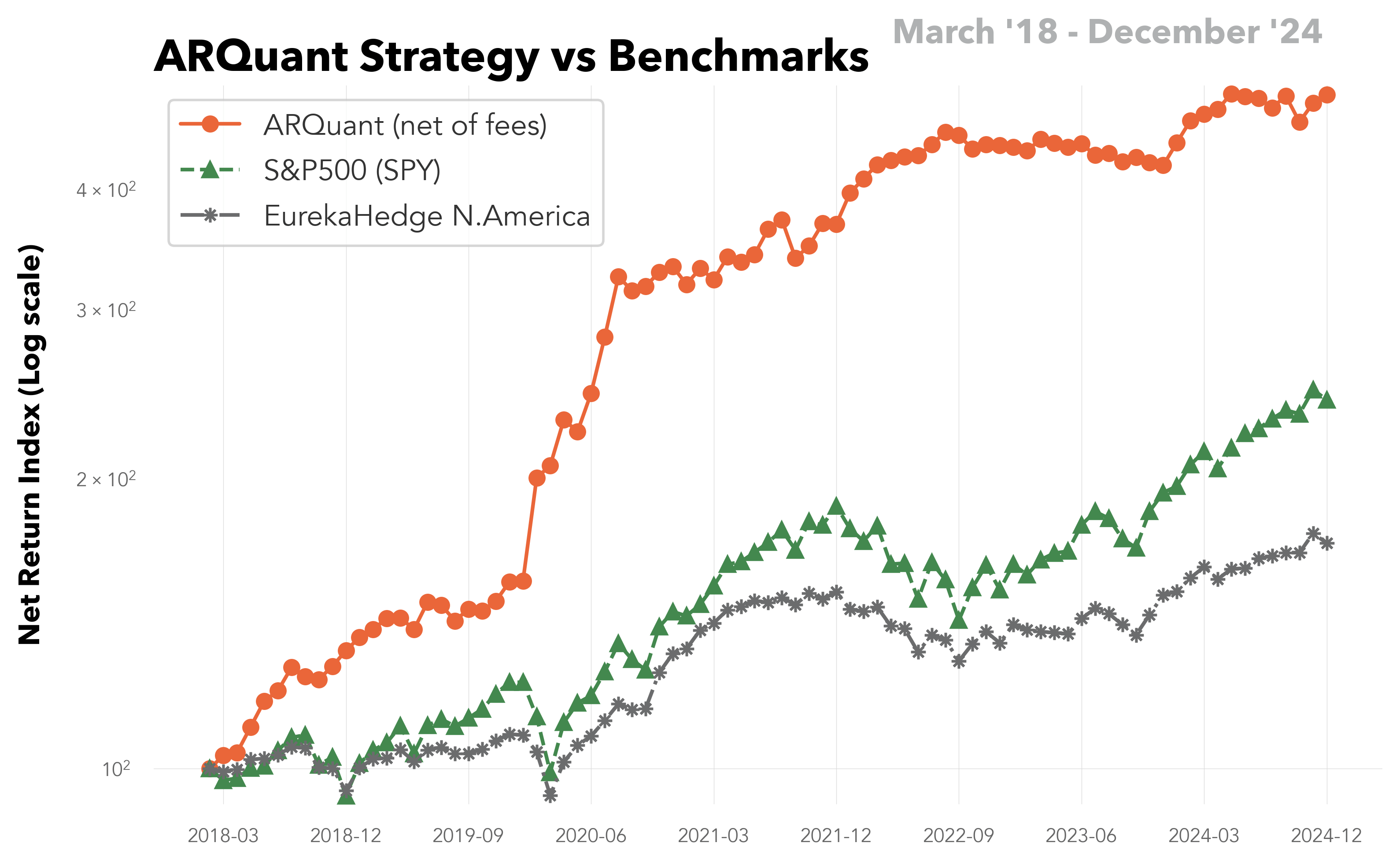
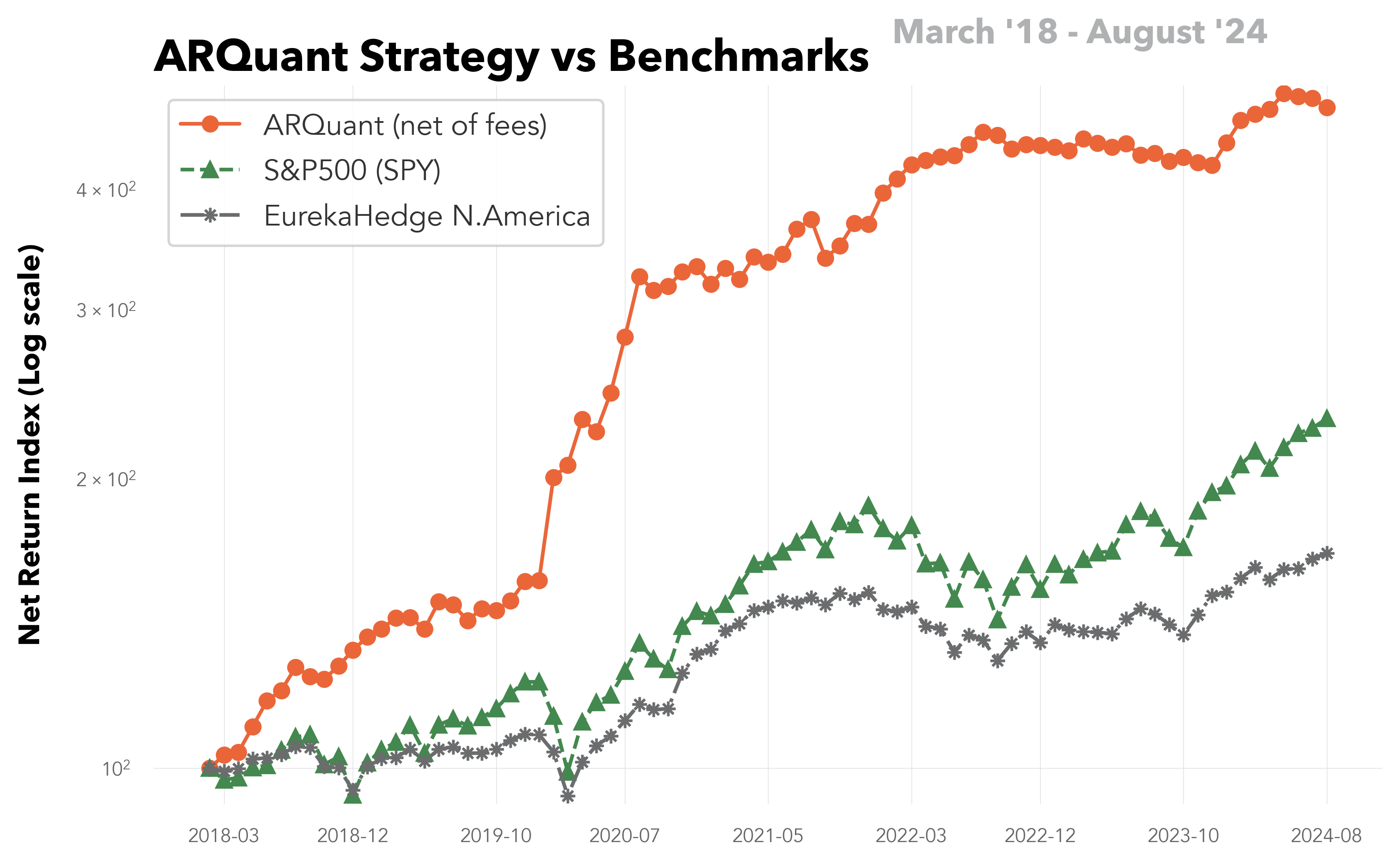
This year our robot generated net return 21.0% YTD and far outperformed our benchmarks HFRI EH Quantitative Directional Index (-3.66% YTD) and Eureka hedge North America Long Short Equities Hedge Fund Index (-10.46% YTD). Our robot has traded positive all months.
Daily gross exposure in July was higher than in June (43% vs 33%) but the maximum didn’t exceed 122%. Net exposure was long on average (20%) however varied from +87% to-38% over the month.
Last Month
July 20 was the best day when daily return reached 1.29% and the rest of the month was successful. The worst day of the month happened on July 11 when a loss was -1.4% then followed up by three bad days.
Year-to-Date (YTD)
January is still the best month of the year with 7.84% p.m. return (before fees), and June remains the weakest month with 0.72% p.m. return (before fees). As mentioned, July happened to be a “mean”.
The full Newsletter can be found here: ARQuant Newsletter 2022-07
 Warning: Past performance is not a guarantee or a reliable indicator of future results. All investments contain risk and may lose value. Investing in foreign denominated and/or domiciled securities may involve heightened risk due to currency fluctuations. Currency rates may fluctuate significantly over short periods of time and may reduce the returns of a portfolio. Derivatives may involve certain costs and risks such as liquidity, interest rate, market, credit, management and the risk that a position could not be closed when most advantageous. Investing in derivatives could lose more than the amount invested. Diversification does not ensure against loss. There is no guarantee that these investment strategies will work under all market conditions and each investor should evaluate their ability to invest for a long-term especially during periods of flat market or downturn in the market.